URIEL Health — Family Decision Stewardship
Deciding for someone who can no longer decide.
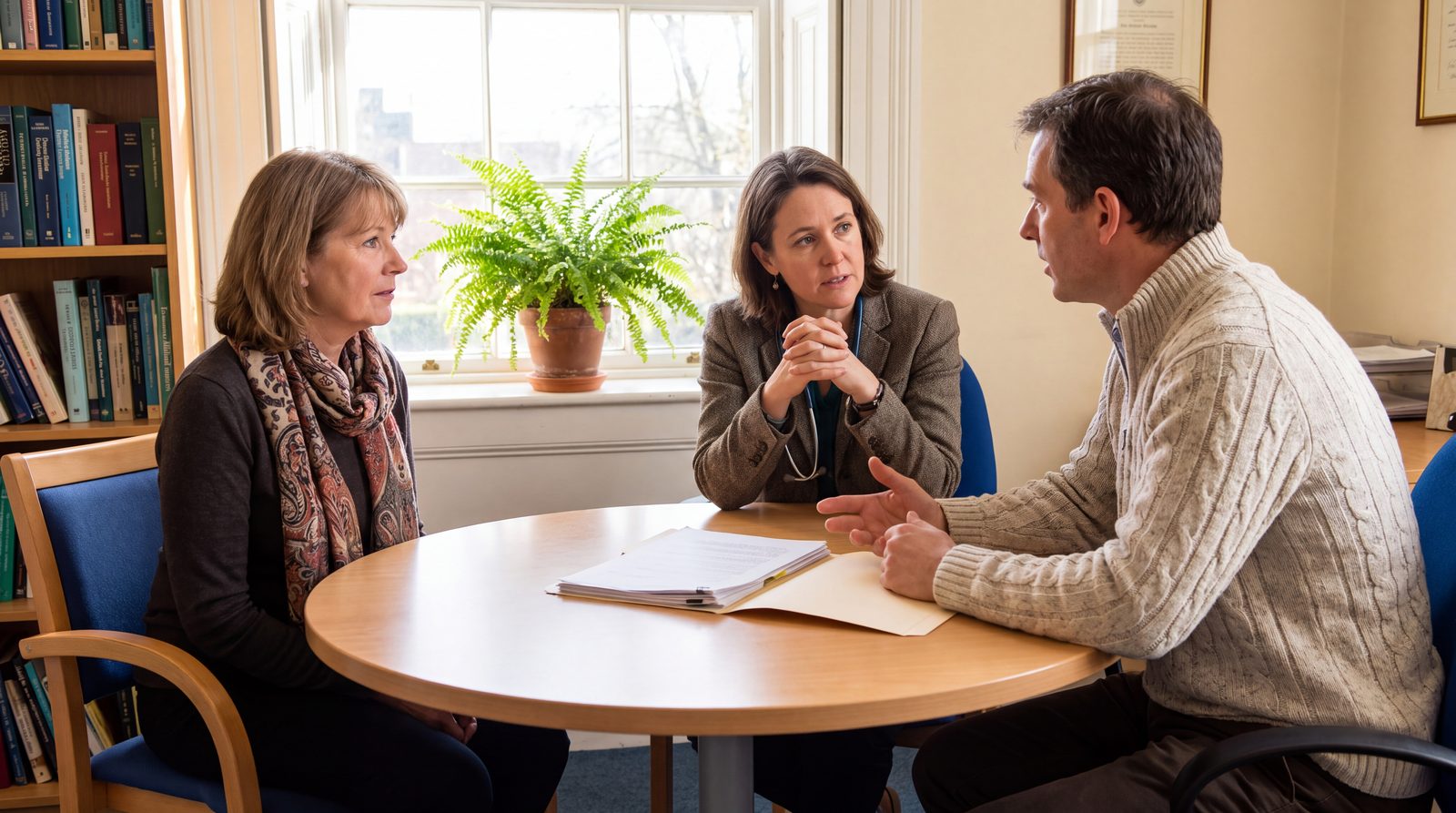
Deciding for someone who can no longer decide for themselves is a silent, isolating weight. Conflicting specialist recommendations, family friction and terminal uncertainty wear down even the most devoted advocates.
The mechanism underneath
The particular exhaustion of deciding for someone else
Surrogate decisions are harder than decisions made for oneself, and not because the medicine is more complex. They are harder because the standard is unknowable. You are not choosing what you would want. You are trying to reconstruct what someone else would have wanted, from a lifetime of evidence that was never gathered for this purpose.
Repeated decisions of that kind under emotional load produce a measurable decline in the quality of the next one. The mind reaches for whichever option closes the question fastest, and closure begins to feel like clarity. This is where families defer to the most recent specialist rather than the most relevant one.
The cost lands afterwards. Advocates rarely regret the decision itself. They regret not being able to say why they made it.
The five-stage method
How URIEL works on this decision.
URIEL organises complex clinical choices into clear ethical and relational boundaries, protecting caregivers from decision fatigue and the regret of second-guessing.
01
Discover
What is actually being decided, underneath the question the hospital has asked.
02
Decode
Which specialist recommendations genuinely conflict, and which only appear to.
03
Determine
The choice examined against your own values and theirs, held apart from exhaustion and family pressure.
04
Deploy
A decision you can state out loud to your family and to the clinical team.
05
Develop
Reasoning you can return to later — which is what protects you from second-guessing.
Discover, Decode, Determine, Deploy and Develop are the five stages of the sequencing method described in URIEL’s patent application. U.S. Patent Pending. The science sets out the evidence base.
Begin a conversation about this.
Engagements are scoped with you directly, in confidence, and at whatever pace the decision allows.